 By Zevan
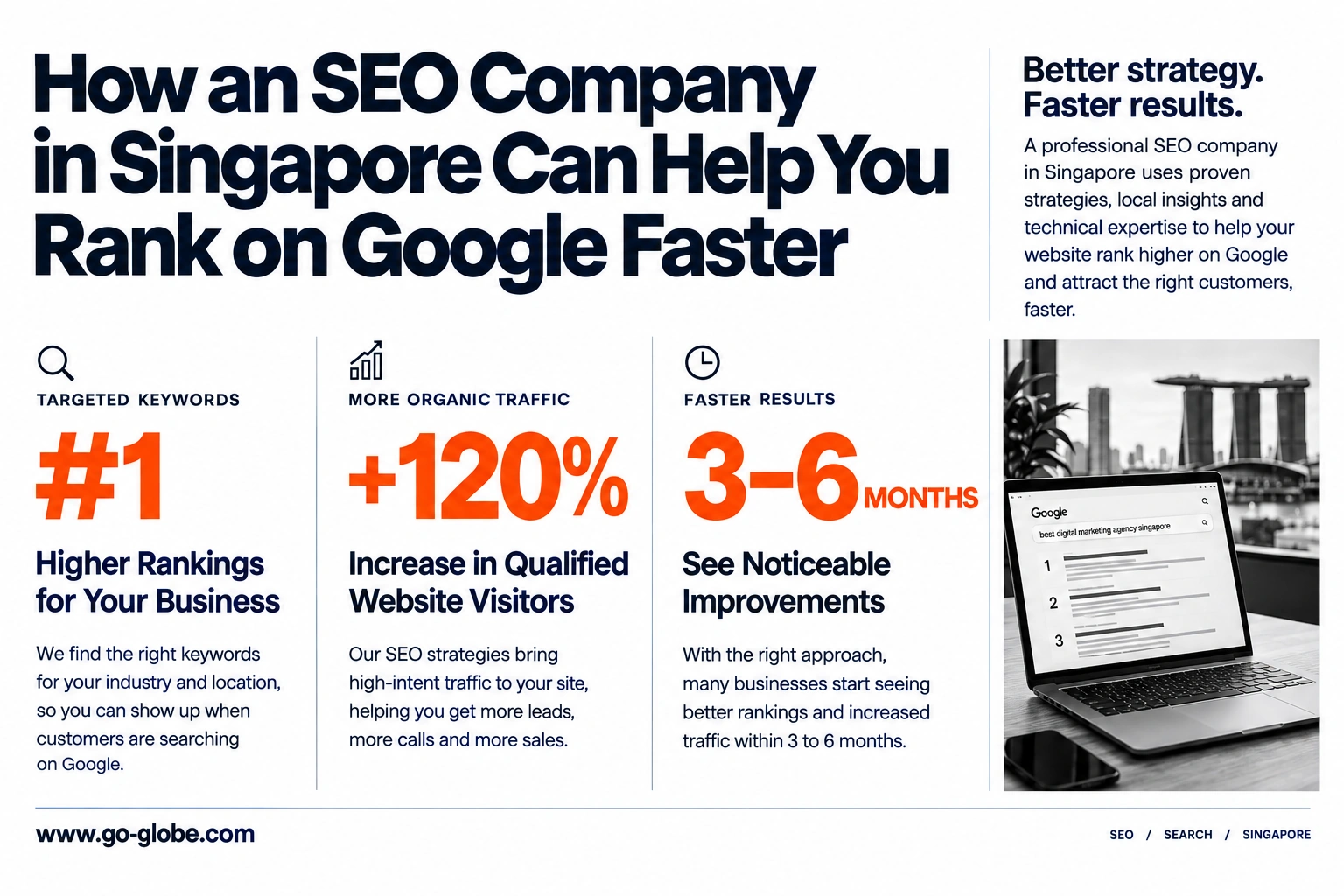
Ranking on the first page of Google rarely happens by accident. Behind every business that shows up for a competitive search term, there is usually a structured plan built around technical accuracy, relevant content, and consistent optimization. This is where a specialized SEO company Singapore businesses rely on can make a real difference, especially in a market where digital competition keeps growing every year.
Singapore’s online market is dense and fast-moving. New websites launch constantly, and established brands keep refining their content to hold their positions. Because of this pace, businesses that try to handle SEO without guidance often see slow, inconsistent results. A structured approach, backed by experience, tends to shorten that timeline considerably.
Why Ranking Speed Matters for Singapore Businesses
Search rankings influence far more than website traffic. They shape brand credibility, customer trust, and ultimately, revenue. A business that ranks on page one appears more established than one buried on page three, even if both offer similar products or services.
Speed matters because Singapore’s digital economy moves quickly. A new competitor can enter a niche within months, and once they gain rankings, displacing them becomes harder. Businesses that delay their SEO efforts often find themselves working twice as hard to catch up later.
However, “faster rankings” does not mean shortcuts. It means removing the obstacles that typically slow a website down and prioritizing the changes that produce results sooner rather than later.
What Actually Slows Down Search Rankings
Before looking at solutions, it helps to understand why so many websites struggle to rank in the first place. A few recurring issues show up again and again.
- Technical barriers, such as slow loading speeds, broken links, or poor mobile responsiveness, make it harder for search engines to crawl and trust a site.
- Thin or duplicate content across pages confuses search engines about which page deserves to rank for a given search term.
- Weak site structure buries important pages under too many clicks, reducing their visibility to both users and search engines.
- Missing local signals, like inconsistent business information or a lack of location-specific content, hold back businesses targeting Singapore-based customers.
- No content strategy, which leaves a website with only product pages and nothing that answers the broader questions potential customers are searching for.
Most of these problems compound over time. A site with technical issues also tends to struggle with content performance, since search engines cannot properly index or understand pages that load slowly or are structured poorly.
How an SEO Company Speeds Up the Process
A professional SEO company Singapore business owners work with typically follows a structured sequence. It rarely jumps between random tactics. This order matters because fixing foundational issues first prevents wasted effort later.
1. Technical SEO Audit and Fixes
Every effective strategy starts with a technical audit. This step identifies crawl errors, indexing issues, duplicate content, broken links, and site speed problems. Fixing these issues early gives search engines a cleaner, faster site to evaluate, which often leads to quicker improvements once other optimizations begin.
Core Web Vitals, which measure loading speed, interactivity, and visual stability, also fall under this stage. Google factors these signals into rankings, so a technically sound website tends to respond faster to subsequent SEO work.
2. Keyword Research Based on Real Search Intent
Ranking faster depends on targeting the right keywords, not just popular ones. A term with high search volume but intense competition may take years to rank for, while a more specific, intent-driven keyword can bring results within months.
This is also where secondary terms such as SEO services Singapore and Google ranking Singapore fit naturally into a broader keyword strategy. They work alongside industry-specific and location-specific search terms that match how local customers actually search.
3. On-Page Optimization
Titles, headers, meta descriptions, and internal links all influence how well a page performs. Pages that are properly optimized around a clear topic tend to rank faster than pages stuffed with unrelated keywords or vague content.
Internal linking plays a particularly underrated role here. Connecting related pages helps search engines understand a site’s structure and distributes ranking authority across important pages instead of concentrating it in just one or two.
4. Content That Matches the Buyer Journey
Content built around real customer questions tends to rank faster than generic, broad-topic articles. A well-researched guide, comparison page, or FAQ resource answers specific queries that search engines can match to specific searches.
Consistent publishing also plays a role. Search engines tend to favor websites that regularly add relevant, well-structured content, since it signals an active and maintained resource rather than a stagnant site.
5. Local SEO for the Singapore Market
For businesses serving customers within Singapore, local SEO accelerates visibility significantly. This includes consistent business listings, location-specific content, and structured data that helps search engines understand exactly where a business operates and who it serves.
Local relevance often shortens the ranking timeline because competition for geographically specific searches is usually narrower than competition for broad, global keywords.
6. Link Building With Genuine Authority
Search engines treat links from credible websites as a vote of confidence. A steady link-building approach, built on real relationships and relevant content, tends to produce durable results. Large batches of low-quality links can trigger penalties instead of progress.
Quality matters more than quantity here. A handful of relevant, authoritative links often does more for rankings than dozens of unrelated ones.
Why a Localized Strategy Matters in Singapore
Singapore’s market includes a mix of languages, cultural references, and shopping behaviors that differ from neighboring countries. A strategy built for a broader Southeast Asian audience does not always translate well to Singapore-specific searches.
For instance, local shoppers often search using a mix of English and colloquial terms, and mobile browsing dominates most buying decisions. Understanding these patterns allows an SEO company to prioritize the keywords and content formats that actually match how Singapore-based customers search and buy.
This localized understanding also affects timing. Search trends around major shopping periods, such as year-end sales, shift earlier or later depending on regional habits. A strategy that accounts for this timing tends to capture traffic before competitors do.
What to Look for When Choosing SEO Support
Business owners exploring an SEO company Singapore should base their decision on a few practical factors rather than promises of instant results.
- A clear technical process, starting with an audit rather than jumping straight into content or link building.
- Transparent reporting that tracks rankings, organic traffic, and conversions, not just superficial metrics.
- Experience with Singapore-specific search behavior, including local competition and language patterns.
- Realistic timelines, since even accelerated SEO results typically take a few months to fully materialize.
A trustworthy SEO partner explains their reasoning clearly, whether that involves keyword choices, technical changes, or content priorities, rather than presenting SEO as a black box.
Measuring Whether Rankings Are Actually Improving
Tracking progress requires looking beyond simple ranking positions. Organic traffic growth, click-through rates, and conversion rates from search traffic all paint a fuller picture. So does the number of keywords ranking on page one.
Reviewing this data regularly allows adjustments before small issues become larger setbacks. A ranking drop for one keyword might be minor, but a broader traffic decline across multiple pages usually signals something that needs immediate attention.
Balancing Speed With Long-Term Stability
There is often tension between ranking quickly and building a strategy that lasts. Some tactics can push a website up the rankings within weeks, but many of these shortcuts carry risk. Search engines regularly update their algorithms to catch manipulative practices, and websites that rely on them can lose their gains just as quickly as they gained them.
A sustainable approach balances both goals. Technical fixes and on-page improvements tend to produce visible movement early, since they remove barriers that were previously holding a site back. Content and link-building efforts, meanwhile, build authority that compounds over months and years. Combining both creates faster initial progress without sacrificing long-term stability.
This is also why experienced SEO companies avoid promising exact rankings or fixed timeframes. Search algorithms account for hundreds of factors, and competitors are making changes at the same time. A realistic strategy focuses on consistent improvement rather than guaranteed positions, since that approach tends to hold up better over time.
SEO and Paid Search: Different Timelines, Different Roles
Many Singapore businesses run paid search campaigns alongside their SEO efforts, and understanding how the two differ helps set realistic expectations. Paid search can generate visibility almost immediately, which makes it useful for time-sensitive promotions or new product launches.
Organic rankings take longer to build but tend to keep working long after a campaign budget runs out. A page that ranks well organically continues to attract visitors without ongoing ad spend, which makes SEO a more cost-effective channel over time. Many businesses use paid search to bridge the gap while their organic rankings grow, then gradually shift their budget as organic traffic increases.
Frequently Asked Questions
How fast can an SEO company help a website rank on Google? Timelines vary by competition and starting point, but many businesses see measurable improvements within three to six months once technical issues are resolved and optimized content is published consistently.
Is local SEO necessary for every Singapore business? It depends on the business model. Companies serving local customers, such as clinics, retailers, or service providers, benefit significantly from local SEO. Businesses selling nationally or internationally may prioritize broader keyword strategies instead.
Can a website rank faster by publishing more content? Not necessarily. Publishing volume matters less than relevance and quality. A smaller number of well-researched, properly optimized pages usually outperforms a large volume of thin content.
Does switching SEO providers slow down progress? It can, particularly if a new strategy conflicts with previous work. A good SEO company usually reviews existing SEO history before making changes, so momentum is not lost during the transition.
Final Thoughts
Ranking on Google faster is less about shortcuts and more about removing obstacles, prioritizing the right fixes, and maintaining consistency over time. A structured process, covering technical health, keyword strategy, content, and local relevance, tends to produce faster and more durable results than a scattered approach from an inexperienced SEO agency Singapore businesses might otherwise choose.
Teams like GO-Globe work with Singapore-based businesses to build this kind of structured approach, helping websites move through the ranking process with clarity instead of guesswork.
 IQnewswire
 Lucas